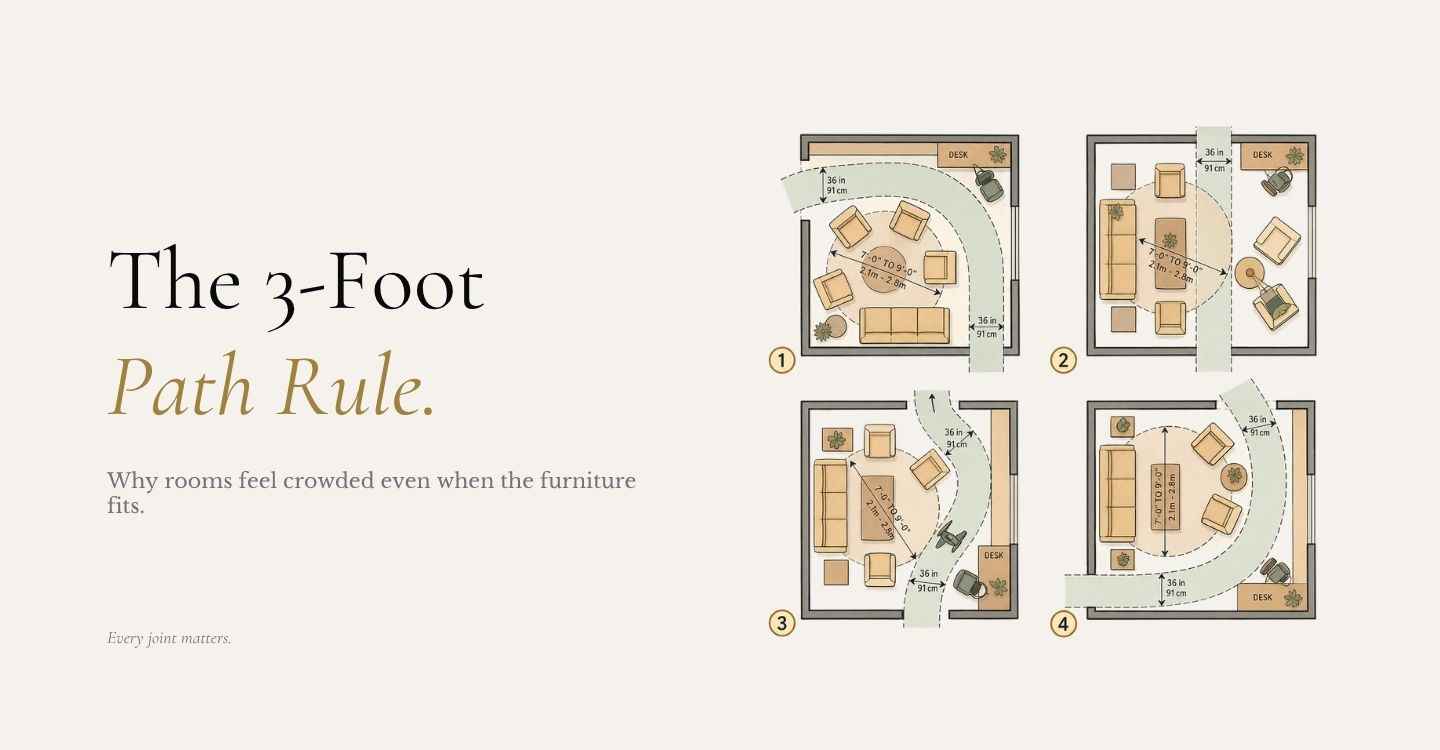
Most people measure furniture by asking one question: will it fit? A sofa can fit inside the room and still make the room feel tight. A coffee table can look good in a product photo and still make daily movement annoying. The better question is whether people can still move through the room comfortably. That is where the 3-foot path rule comes in.
At Join.T Design Studio, we focus on how spaces connect and function — not just how they look. A room that feels "off" usually has a hidden layout problem: the furniture may be stealing the path. That is especially important for homeowners planning a redesign, furniture upgrade, or virtual room design package.
What Is the 3-Foot Path Rule?
The 3-foot path rule is a simple layout check:
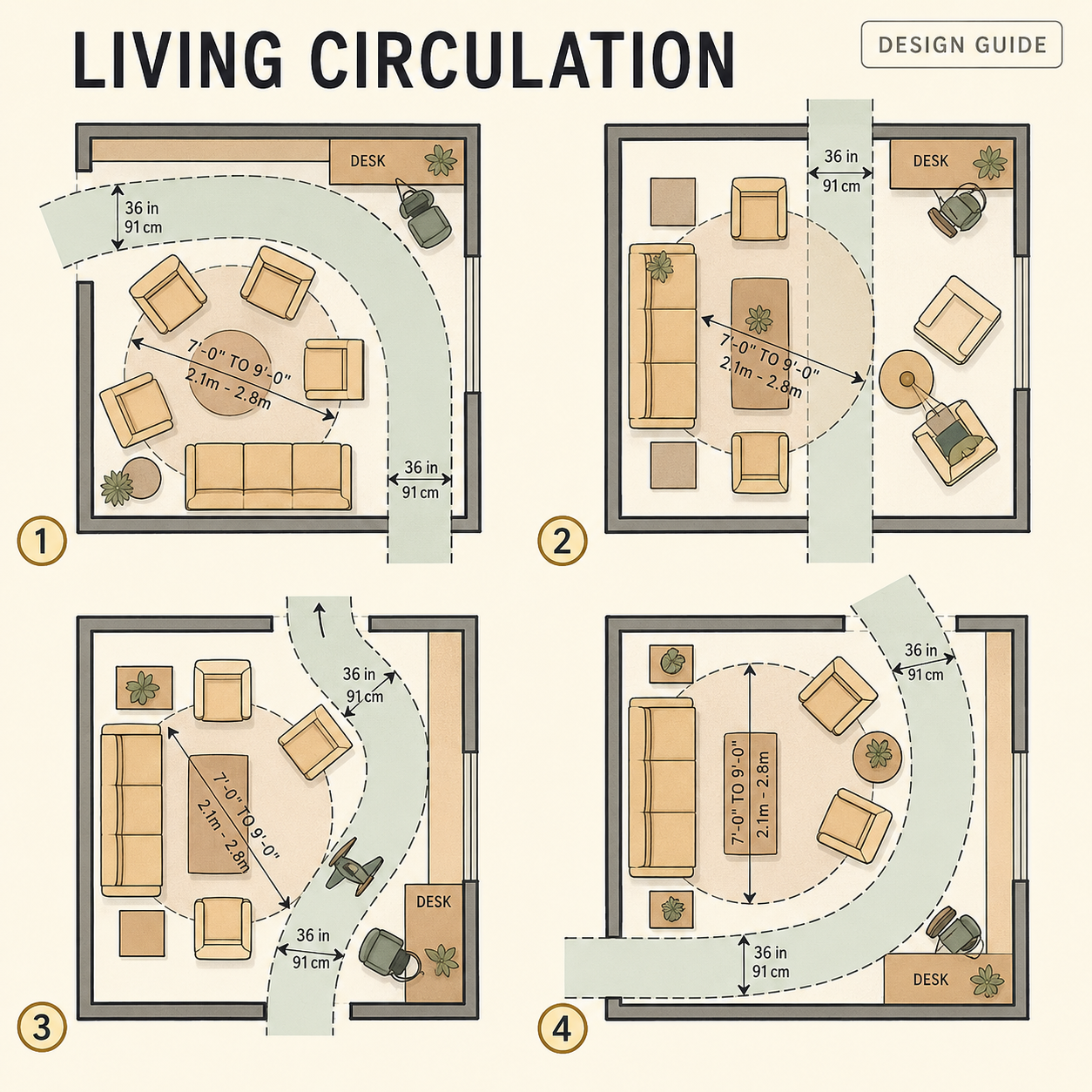
Keep about 36 inches of clear space where people actually walk.
This does not mean every space between every object needs to be three feet wide. That would make most real homes feel empty and awkward.
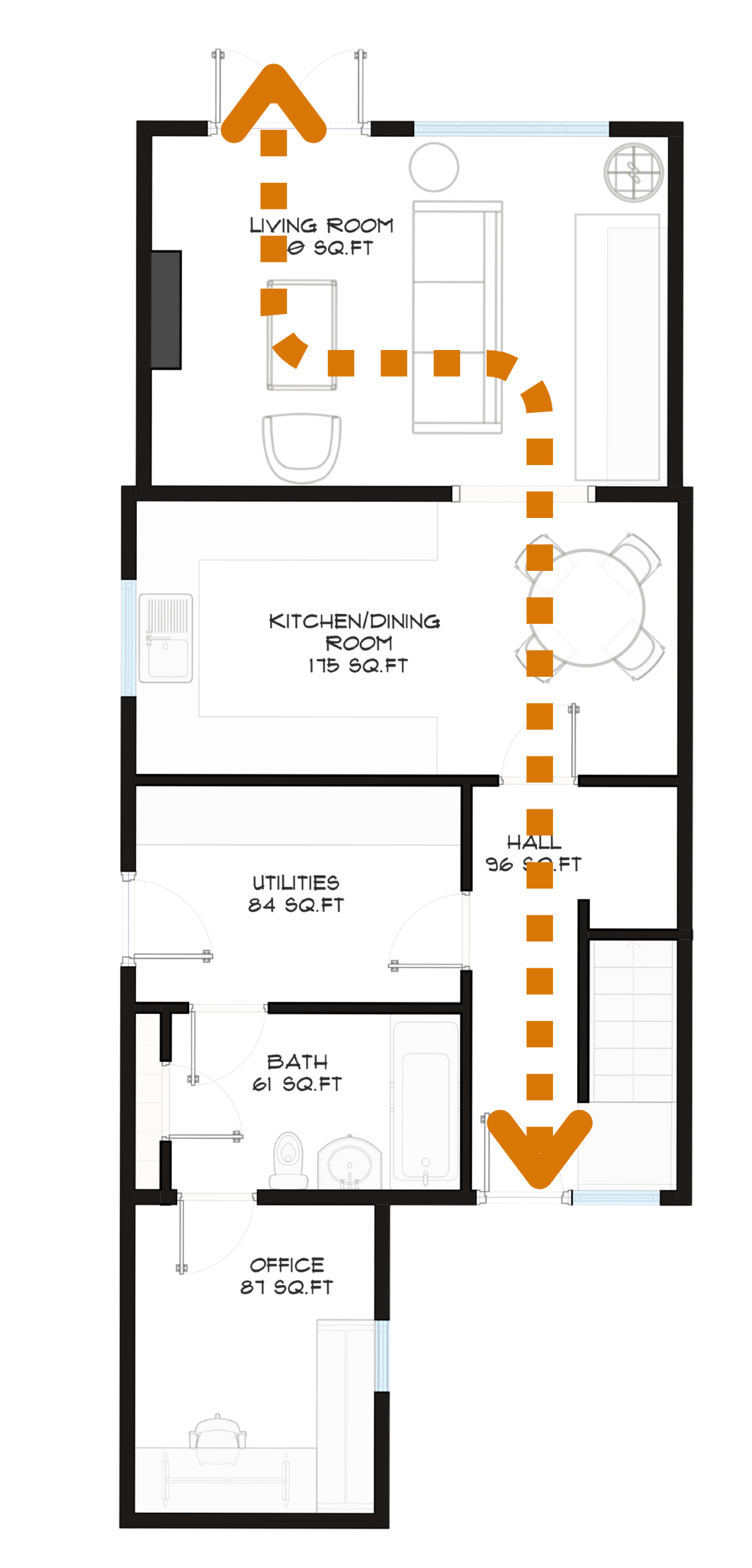
It means the main path of movement should stay clear. That path might be:
- from the doorway to the sofa
- from the kitchen to the living room
- from the bedroom door to the closet
- from the entry to the window
- from the hallway into the main seating area
- from the dining area to the kitchen
In other words, the rule is not really about empty space. It is about breathing room.
The Mistake: Measuring the Furniture but Not the Path
Most people measure the furniture.
They check the sofa length. They check the rug size. They check the wall where the console will go. They check whether the bed fits between two windows.
That is all important. But they often forget to measure the space around the furniture. That is where rooms start to fail.
A living room may have a beautiful sectional, a nice coffee table, and a great media console. But if the sectional blocks the route from the kitchen to the exterior door, the whole room feels wrong.
A bedroom may have a bed that technically fits, but if the path between the bed and dresser is too narrow, the room feels crowded every morning.
A dining table may fit in plan, but once chairs pull out, the circulation disappears.
The room does not feel crowded because it has furniture. It feels crowded because the furniture steals the path.
Why 36 Inches Works in Most Rooms
Three feet is a practical residential rule of thumb because it gives a person enough space to walk naturally without turning sideways, brushing against furniture, or feeling squeezed.
It is especially useful in:
- living rooms
- bedrooms
- home offices
- small apartments
- open-plan spaces
- furniture layouts where multiple zones meet
A 30-inch path can sometimes work in a tight secondary condition, but it usually feels more like a squeeze. Around 36 inches feels more intentional. It gives the body room to move, carry laundry, walk around a coffee table, pass a chair, or navigate the space with a pet, child, guest, or bag in hand.
A room can look finished in a photo and still be frustrating in daily life. The 3-foot path rule helps separate a room that is merely furnished from a room that actually works.
Some Spaces Need More Than Three Feet
The 3-foot rule is not a hard law. Some areas need more space because the activity is more demanding.
Kitchens
In kitchens, I typically look for more than three feet. A kitchen is not just a walking zone — it is a working zone.
People open cabinet doors, pull out drawers, use appliances, turn around with hot pans, unload groceries, and sometimes share the space with another person. In those situations, closer to 4 feet can be more comfortable, especially between an island and a perimeter counter.
Dining Areas
Dining areas also need more than simple walking clearance. You need space for chairs to pull out, people to sit, and someone to pass behind them if needed. A tight dining layout may look fine when the chairs are pushed in, but once people sit down, the room changes.
For dining, 36–42 inches between the table edge and wall or nearby furniture is often a better working range.
Shared Paths
If two people regularly cross the same path, widen it when possible. A main route between the kitchen and living room, a hallway-like path through an open-plan space, or a busy family entry zone may need more than three feet to feel comfortable.
Three feet is a good starting point. More space is needed when the activity demands it.
The Sofa-to-Coffee-Table Test
Not every spacing rule is about walking. Some spacing is about comfort.
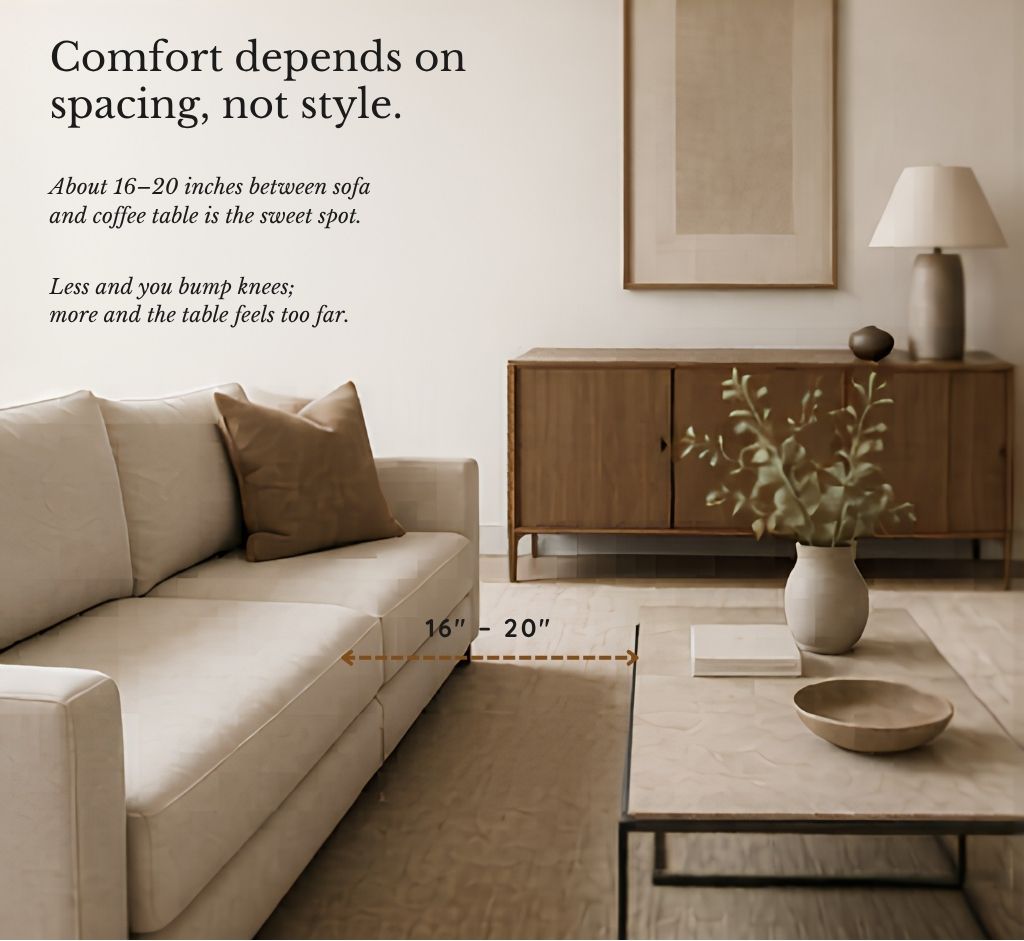
For example, the distance between a sofa and coffee table is usually much smaller than three feet. A comfortable range is often around 16–20 inches. That gives you enough room to move your legs while still keeping the table close enough to reach a drink, book, remote, or tray.
If the coffee table is too close, you bump your knees. If it is too far, the table feels disconnected from the seating.
That is the point: good design is about relationships. The sofa, coffee table, rug, lighting, windows, and walking path all have to work together. One piece can be beautiful on its own and still wrong for the room if the relationships are off.
Before You Buy Furniture, Measure These 5 Things
If you are planning a room redesign or buying new furniture, measure more than the empty wall. Here are five things to check first.
1. Doorways
Before you fall in love with a sofa, make sure it can actually get into the room. Measure:
- doorway width
- hallway width
- ceiling height
- stair turns
- the diagonal depth of the furniture
- the path from delivery entry to final room
A sofa can fit the doorway width and still fail at the hallway turn. This is one of the least glamorous parts of design, but it can save you from expensive returns and frustration.
2. Walking Paths
Identify where people actually walk. Do not look at the room as a container for furniture — look at it as a set of movements. Ask:
- Where do you enter?
- Where do you sit?
- Where do you walk to the kitchen?
- Where does the dog move?
- Where do guests naturally pass through?
- What path gets used every day?
Then protect that path. If the main route gets squeezed, the whole room feels tight — even if every piece technically fits.
3. Sofa-to-Table Distance
Comfort depends on spacing, not just style. For most living rooms, check the distance between the sofa and coffee table. Around 16–20 inches is usually a good range. This keeps the table reachable without making the seating area feel cramped.
The goal is not to center objects perfectly in the room. The goal is to make the seating zone work for real people.
4. Wall Length
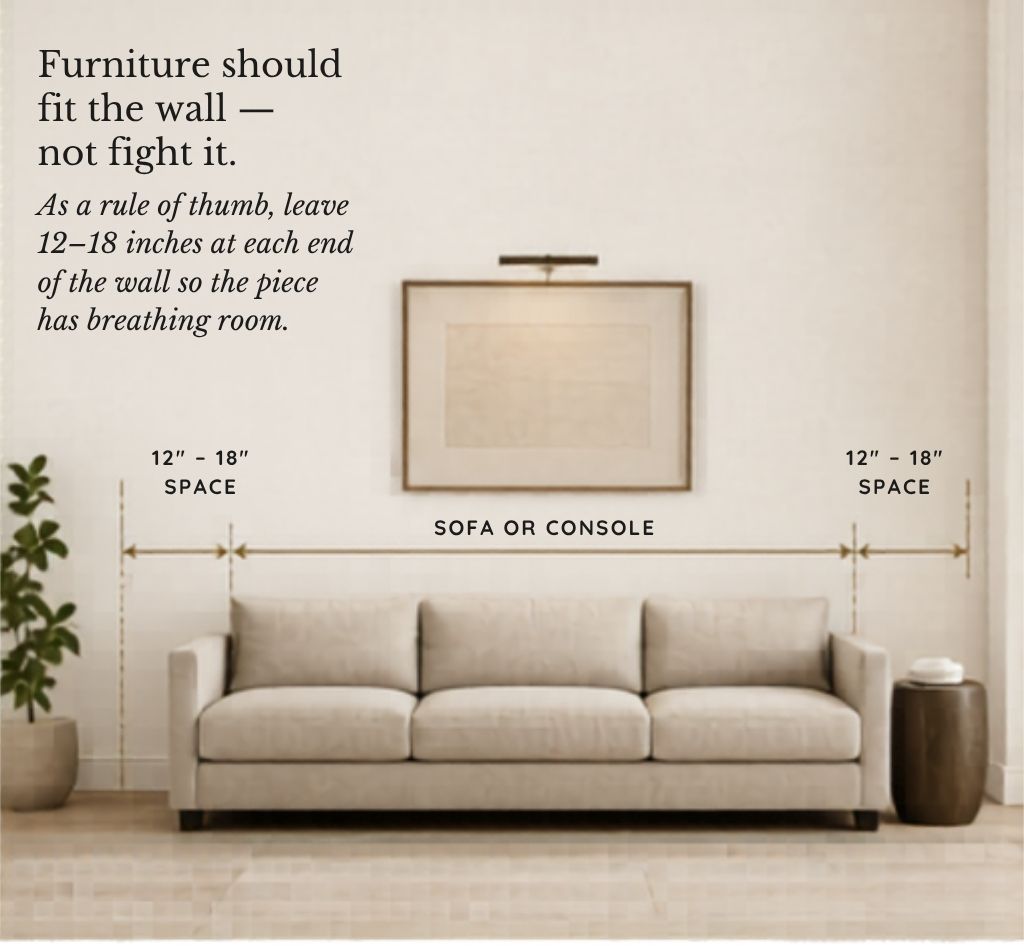
Furniture should fit the wall, not fight it. A media console, sofa, credenza, desk, or storage piece needs breathing room. If it runs too close to the corners, trim, doorway, radiator, or window, it can make the room feel forced.
As a rule of thumb, try to leave 12–18 inches at the ends of a wall-mounted or wall-aligned furniture piece when possible. That space makes the piece feel intentional instead of jammed in.
5. Windows, Radiators, and Outlets
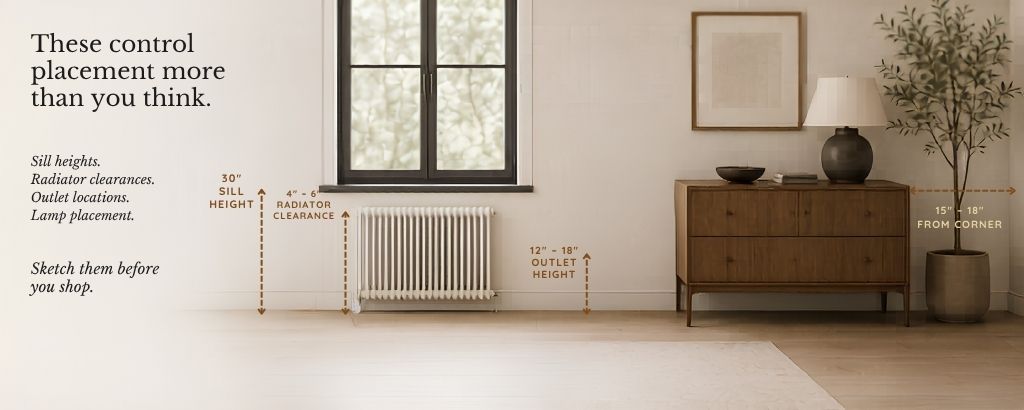
The room already has rules before furniture arrives. Windows, radiators, outlets, switches, baseboards, door swings, and vents all control placement more than people think.
Before buying, sketch the room and mark:
- window sill heights
- radiator locations
- outlet locations
- door swings
- existing lighting
- wall obstructions
- usable wall lengths
This does not need to be a perfect architectural drawing. Even a simple sketch can prevent major furniture mistakes. The point is to know what the room is asking for before you start shopping.
A Good Room Starts Before Checkout
Furniture shopping often feels like the beginning of a room design. But really, it should come after the layout thinking.
Before you buy, ask:
- What path needs to stay clear?
- Where does the room naturally want people to move?
- Which wall can actually hold the furniture?
- Where are the windows, radiators, and outlets?
- Is the furniture solving the room or making the room harder to use?
A good room starts before checkout. It starts with the plan.
The Takeaway
The goal is not empty space.
The goal is breathing room.
A room does not feel better just because it has less furniture. It feels better when the furniture supports the way people actually live. That is the difference between a room that looks finished and a room that feels right.
Give kitchens, dining areas, and shared routes more space when they need it. Then choose the pieces.
Want to test this on your own room?
Everything above is easier to judge on paper than in your head. The Room Measurement + Layout Workbook walks you through measuring one room properly, then testing the arrangement on a grid drawn at 1/4 inch to the foot, with 32 furniture cut-outs at matching scale. Eleven pages, printable, $27.
Get the workbookWould rather hand it over? The virtual design packages start at $399 and include the layout, the furnishing plan, and a visualization of your actual room.